Our Extra Virgin Olive Oil
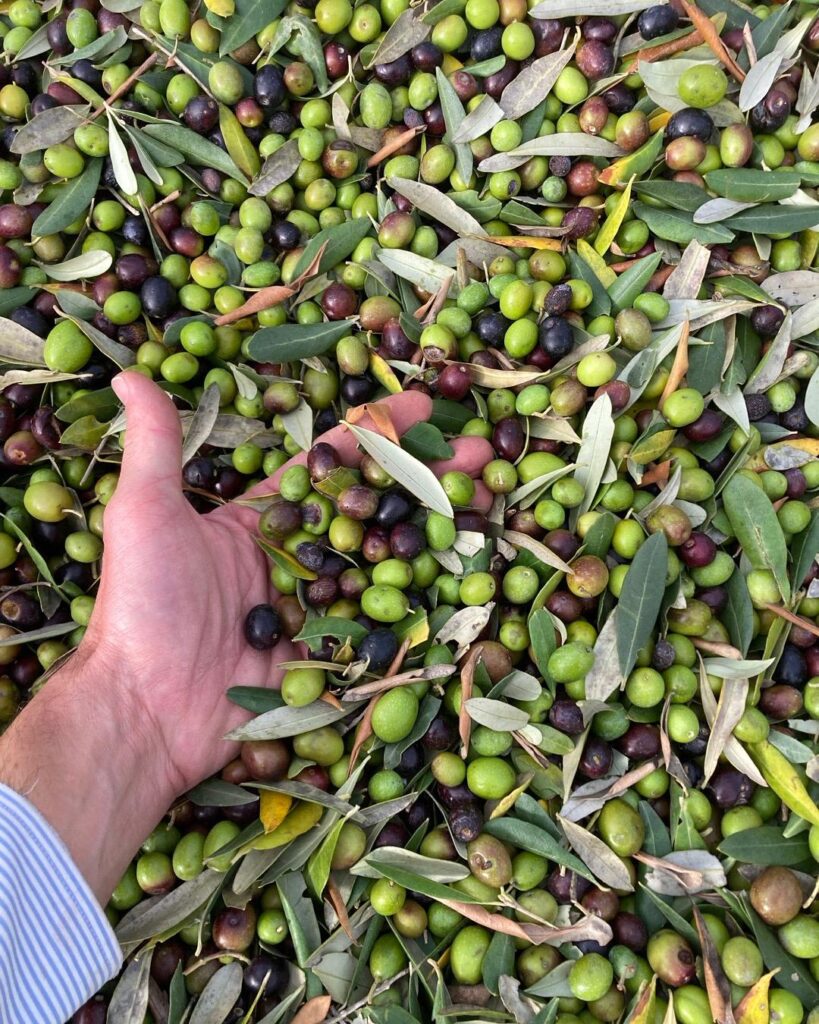
Our Extra Virgin olive oil comes mostly from the varieties (cultivar) Leccino, Frantoio, Moraiolo, which are typical tuscan olive trees varieties, renowned for their rich flavour and intense aroma.
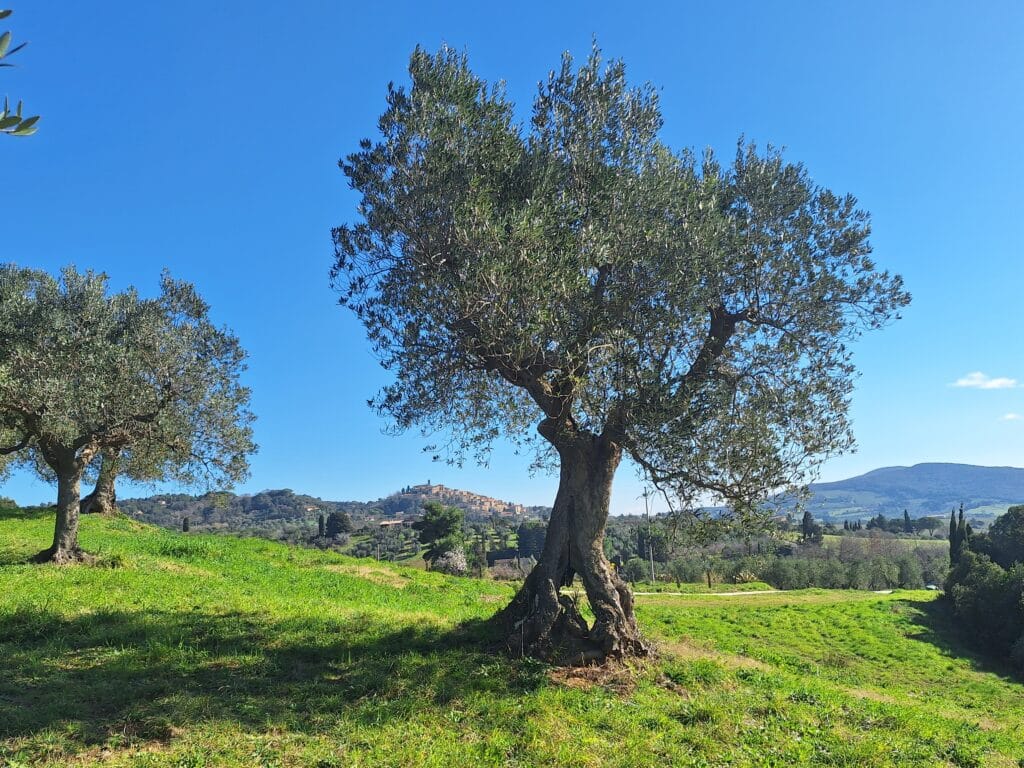
The oil is produced exclusively from trees that we own or we manage directly, some of them are over 300 years old….
Read our post HERE to learn more in detail how the oil is extracted from the olives.
Or check out our other post HERE to discover some fun facts about the world of extra vergin olive oil
The production process foresees the extraction of the oil only by pressing and centrifuging, with no addition of chemicals, and no heating or use of any other treatment that would impact its original composition and flavour profile.
Straight from the olives!
The oil then goes through a filtration process, in order to remove all the impurities, water and particles which would later compromise its preservation, and it is then bottles in dark glass or tin containers, to preserve it from the light.
The taste of extra virgin olive oil
No olive oil is the same as another one, and similarly to wine, the taste of an extra virgin olive oil is influenced mainly by:
– the olive tree variety (cultivar)
– the ground and location in which the tree grows
– the timing of the harvest (early vs late)
– farming practices (care of the trees, soil enrichment, etc)
The three major ‘flavour notes’ which define the taste of an extra virgin olive oil are:
Fruitiness
Fruitiness is defined as the overall aromas and smells which remind you of fresh and healthy olive fruits. It can vary between light fruity (with aromas of grass, artichoke, tomato leaf) to ripe fruity (sweeter, buttery taste).
Pungency
Pungency is the (positive) sensation of peppery, tickling or slitghly itching at the back of the throat. It is caused by the presence of particular compounds called polifenols, which are powerful natural antioxidants. The specific chemical responsible for this (called Oleocanthal) has anti-inflammatory properties similar to the drug Ibuprofen.
The pungency feature denotes a high quality olive oil, and it is often associated with an early harvest.
Bitterness
Bitterness is another positive flavour feature that is also associated to the presence of poliphenols and an earlier harvest, so using less ripe olives. Contrary to the common misconception, this is not a defect, but rather a high quality mark. A sweeter and flatter oil is most likely a late harvest oil, hence poorer in poliphenols and antioxidants.